
EV charger installation in Henderson, NV
EV charger installation in Henderson, NV from Bright Wave Electric provides licensed electrical services for Level 2 chargers, dedicated 240V circuits, charger wiring, breakers, hardwired connections, and compatible 240V receptacles. A licensed electrician can assess your electrical panel and available load capacity, size the required circuit, install the wiring and breaker, connect the charging equipment, and test the completed installation.
Bright Wave Electric can dispatch a licensed electrician when you need to install an EV charger at your Henderson home or business, add a dedicated charging circuit, evaluate panel capacity, or complete electrical upgrades required for the planned charging load.
Call +1 (725) 313-2488 to request EV charger installation in Henderson, NV.
- Licensed Electricians
- Level 2 EV Charger Installation
- Dedicated 240V Circuit Installation
- Electrical Panel & Load Assessment
- Hardwired & Receptacle Connections
- Indoor & Outdoor Charger Installation
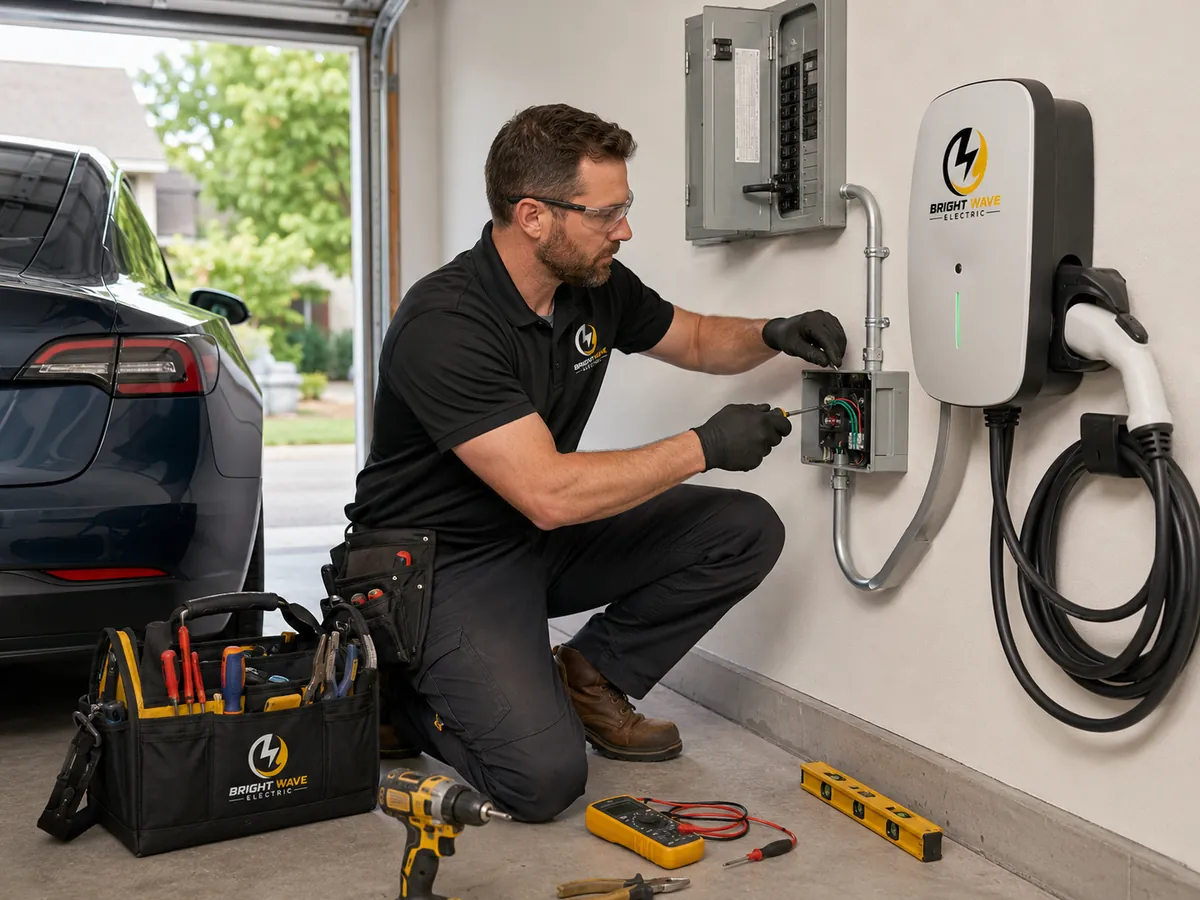
How can you request EV charger installation in Henderson, NV?
You can request EV charger installation in Henderson, NV from Bright Wave Electric when you need a licensed electrician to assess your electrical system, install the required charging circuit, connect compatible EV charging equipment, and test the completed installation.
Call +1 (725) 313-2488 to schedule EV charger installation for your Henderson home or business.
- Emergency electricians24/7
- Service areaHenderson & Las Vegas Valley
- Work coveredResidential & commercial
Thanks — we’ll be in touch about your electrical service.
What EV charger installation services can you request?
You can request Bright Wave Electric for EV charger installation, dedicated charging circuits, charger wiring, electrical panel assessment, and related electrical work required to connect compatible charging equipment.
A licensed electrician from Bright Wave Electric can complete:
- Level 2 EV charger and wall connector installation
- Dedicated 240V circuit installation
- Circuit breaker installation
- EV charger wiring
- Conduit installation when required
- Hardwired EV charger connections
- 240V receptacle installation when appropriate
- Wall-mounted charger installation
- Electrical panel capacity assessment
- Electrical load calculations
- Panel or subpanel work when required
- Indoor charger installation
- Outdoor charger installation
- Residential EV charger installation
- Commercial EV charger installation
- Final electrical testing
The charger, circuit, wiring, breaker, and electrical panel must work together as one properly sized charging system.
What does an electrician check before installing an EV charger?
A licensed electrician checks your electrical panel, service capacity, existing electrical loads, breaker space, charger requirements, and installation location before installing an EV charger.
The assessment helps determine whether your electrical system can support the charging load without unnecessary electrical upgrades.
Your electrician can evaluate:
- Electrical service capacity
- Main electrical panel rating
- Available breaker spaces
- Existing electrical loads
- Charger voltage and amperage
- Required circuit size
- Breaker requirements
- Wire size
- Panel-to-charger distance
- Wiring and conduit route
- Charger mounting location
- Indoor or outdoor exposure
If an electrical problem affects the planned installation, the electrician can diagnose the fault, repair or replace the affected electrical component when authorized, and determine which additional electrical changes the EV charger installation requires.
Does an EV charger need a dedicated circuit?
Most Level 2 EV chargers require a dedicated 240V branch circuit sized for the charger, charging load, and applicable electrical requirements.
A dedicated EV charging circuit normally connects the electrical panel to the charging equipment without supplying unrelated electrical devices.
Your electrician can:
- Determine the required circuit amperage
- Select the appropriate breaker
- Size the wiring for the charging load
- Run the circuit from the panel to the charger location
- Install required conduit
- Connect the charger or receptacle
- Label the new circuit
- Test the circuit after installation
Proper circuit sizing helps the charger operate at the intended charging rate without exceeding the electrical system's available capacity.
Can your electrical panel support a Level 2 EV charger?
Your electrical panel can support a Level 2 EV charger when the panel, electrical service, breaker space, and available load capacity can accommodate the new charging circuit.
A Bright Wave Electric licensed electrician can assess the electrical load, panel capacity, service capacity, and available breaker space before recommending panel or circuit work.
The electrician checks:
- Main service amperage
- Panel rating
- Existing electrical demand
- Available breaker positions
- Charger amperage
- Planned charging load
- Other high-demand electrical equipment
When the electrical system has adequate capacity and available breaker space, the electrician may install the charging circuit without replacing the panel.
When the existing electrical system lacks the required capacity or breaker space, the electrician can determine whether the property needs panel work, a subpanel, service-capacity changes, or another appropriate electrical solution.
Should your EV charger be hardwired or connected to a 240V receptacle?
Your charger specifications, charging amperage, installation location, and electrical requirements determine whether a hardwired connection or 240V receptacle provides the appropriate installation method.
A hardwired charger connects directly to the dedicated EV charging circuit. This configuration commonly supports permanently mounted charging equipment.
A receptacle-based installation connects compatible charging equipment through an approved 240V receptacle when the charger and electrical installation support that configuration.
Before installing either connection, your electrician can verify:
- Charger manufacturer requirements
- Circuit amperage
- Receptacle compatibility
- Breaker requirements
- Indoor or outdoor location
- Wiring method
- Electrical panel capacity
The electrician should match the connection method to the charging equipment rather than installing a receptacle or hardwired connection without checking the charger's electrical requirements.
Where can you install an EV charger?
You can install an EV charger in a garage, carport, exterior charging location, parking area, or another suitable location that allows the required electrical circuit to reach the charging equipment.
Common installation locations include:
- Attached garages
- Detached garages
- Carports
- Exterior garage walls
- Residential parking areas
- Driveway charging locations
- Commercial parking areas
The installation location affects the circuit route, wiring length, conduit requirements, mounting method, and overall electrical work.
A charger located close to the electrical panel may require a shorter circuit run. A detached garage or distant parking location may require additional wiring, conduit, routing, or other electrical work.
How does EV charger installation work?
EV charger installation follows a sequence of electrical assessment, circuit planning, wiring installation, charger connection, and final testing.
- Electrical assessment: A Bright Wave Electric licensed electrician checks the electrical panel, service capacity, breaker space, existing loads, charger amperage, and planned charging location.
- Circuit planning: The electrician determines the required breaker, wire size, circuit amperage, connection method, and wiring route.
- Installation preparation: The electrician identifies the charger location and confirms the electrical work required between the panel and charging equipment.
- Dedicated circuit installation: The electrician installs the breaker, wiring, conduit, receptacle, or hardwired connection required for the charger.
- Charger connection: The electrician mounts and connects the compatible charging equipment according to its electrical requirements.
- Final testing: The electrician tests the circuit, verifies the electrical connections, and confirms charging operation before completing the work.
What does EV charger installation cost in Henderson, NV?
EV charger installation in Henderson, NV typically depends on the charger, dedicated circuit, panel capacity, wiring distance, connection method, and electrical upgrades required for the installation.
| Component | Typical cost range | Installation details |
|---|---|---|
| Level 2 charger hardware | $350-$800 | Charging equipment such as a Tesla Wall Connector, ChargePoint Home Flex, Grizzl-E, JuiceBox, or comparable Level 2 charger. |
| Standard installation labor | $450-$1,200 | Dedicated 240V, 40A–60A circuit with the required breaker, wiring, charger connection, and wall mounting when the charger sits approximately 10–20 feet from the electrical panel. |
| Long conduit or wiring run over 20 ft. | $300-$1,000 | Additional wiring and conduit required to reach a distant garage, detached garage, exterior wall, or other charging location. |
| Subpanel installation | $500-$1,400 | Adds breaker capacity when the existing electrical configuration supports a subpanel rather than replacement of the main panel. |
| 100A-to-200A main panel upgrade | $1,800-$3,500+ | May be required when the existing electrical service cannot support the planned EV charging load and other electrical demand. |
| City permit and inspection fees | Varies by project | Permit fees depend on the electrical work and current City of Henderson fee schedule. |
Your final installation cost depends on the electrical work required at your property. Bright Wave Electric can assess the panel, charging load, circuit route, charger requirements, and installation location before determining the project scope.
Do you need a permit or inspection for EV charger installation?
Permit and inspection requirements for EV charger installation depend on the project scope and the electrical requirements enforced by the authority responsible for the property.
A new EV charging circuit may require electrical permitting, inspection, or other local approval.
Your electrician should determine the applicable requirements before starting work and complete the installation according to the electrical codes that apply to the project.
Permit requirements can become especially relevant when the installation involves:
- A new dedicated circuit
- Panel modifications
- Panel replacement
- Service-capacity changes
- New outdoor electrical work
- Detached structures
- Commercial charging equipment
Can you install an EV charger outdoors?
You can install an EV charger outdoors when the charging equipment, electrical connections, wiring method, and mounting location support exterior installation.
A licensed electrician can evaluate the proposed location before running the charging circuit.
Outdoor installations may require:
- Exterior-rated charging equipment
- Suitable mounting surfaces
- Weather-resistant electrical components
- Approved conduit or wiring methods
- Proper charger placement
- Protection for electrical connections
The electrician should match the equipment and electrical installation to the exposure conditions at the charging location.
Can you install two EV chargers at the same property?
You can install two EV chargers when the electrical service, panel capacity, circuit configuration, and total charging load can support both charging connections.
A two-EV household or commercial property may require separate charging circuits or additional electrical planning.
Before installing the chargers, an electrician can calculate the expected load and evaluate:
- Electrical service capacity
- Panel capacity
- Available breaker spaces
- Charger amperage
- Simultaneous charging demand
- Circuit requirements
- Future charging needs
The load assessment determines whether the existing electrical system can support both chargers or whether electrical changes are required before installation.
Can you install an EV charger if your electrical panel has no open breaker space?
You may still be able to install an EV charger when your electrical panel has no open breaker space, but a licensed electrician must evaluate the panel and electrical system before selecting the correct solution.
The electrician can determine whether the project requires:
- Panel reconfiguration
- Additional breaker capacity
- A subpanel
- Panel replacement
- Electrical service changes
- Another code-compliant electrical solution
Available breaker space alone does not determine whether your electrical system can support the charger. The electrician must also evaluate the total electrical load and service capacity.
What should you know before scheduling EV charger installation?
You can prepare for EV charger installation by identifying your charging equipment, vehicle, preferred charging location, and available electrical panel location before the electrician arrives.
Helpful installation details include:
- Vehicle make and model
- Charger make and model
- Charger voltage
- Charger amperage
- Preferred mounting location
- Distance from the electrical panel
- Indoor or outdoor installation
- Attached or detached garage
- Existing 240V electrical connections
- Plans for another EV charger
Your electrician can use that information with the electrical assessment to determine the appropriate installation scope.
Why should you choose Bright Wave Electric for EV charger installation?
You get licensed EV charger installation planned around your vehicle, charger specifications, available panel capacity, and the electrical requirements of the charging circuit. Bright Wave Electric installs EV charging equipment throughout Henderson, NV and verifies the circuit, connections, and charger operation before completing the job.
You can expect:
- Licensed electricians for EV charger installation
- Panel capacity checked before a new charging circuit is added
- Charger amperage and electrical requirements reviewed before installation
- Correct breaker and wire sizing for the charging load
- Dedicated circuit installation for EV charging equipment
- Hardwired and compatible receptacle-based charger installations
- Charger placement planned around cable reach and parking location
- GFCI protection and other required circuit protection addressed where applicable
- Grounding and electrical connections checked during installation
- Existing electrical equipment evaluated when additional capacity is required
- Circuit and breaker labeling at the electrical panel
- Voltage, connection, and charger operation testing after installation
- Installation for homes, multifamily properties, and commercial locations
- Support for future charging needs when panel and circuit capacity allow
- 24/7 help for urgent electrical problems
- Direct phone scheduling at +1 (725) 313-2488
What EV charger installation questions should you ask?
The most useful EV charger installation questions focus on electrical capacity, circuit requirements, charger compatibility, connection method, installation location, and required electrical work.