
Whole-home generator installation in Henderson, NV
Whole-home generator installation in Henderson, NV gives you permanently installed standby backup power that can start automatically when utility power fails. Bright Wave Electric can dispatch a licensed electrician to assess your electrical load, determine generator capacity, evaluate your electrical panel, install the required generator wiring and automatic transfer equipment, integrate the system with your home's electrical service, and test the completed installation.
You can request service when you want backup power for your air conditioning, refrigerator, lighting, home office, security equipment, medical equipment, pumps, appliances, or other selected electrical loads.
Call +1 (725) 313-2488 to request whole-home generator installation in Henderson, NV.
- Licensed Electricians
- Whole-Home Standby Generator Installation
- Generator Sizing & Load Assessment
- Automatic Transfer Switch Installation
- Electrical Panel Integration
- Generator Startup & Testing
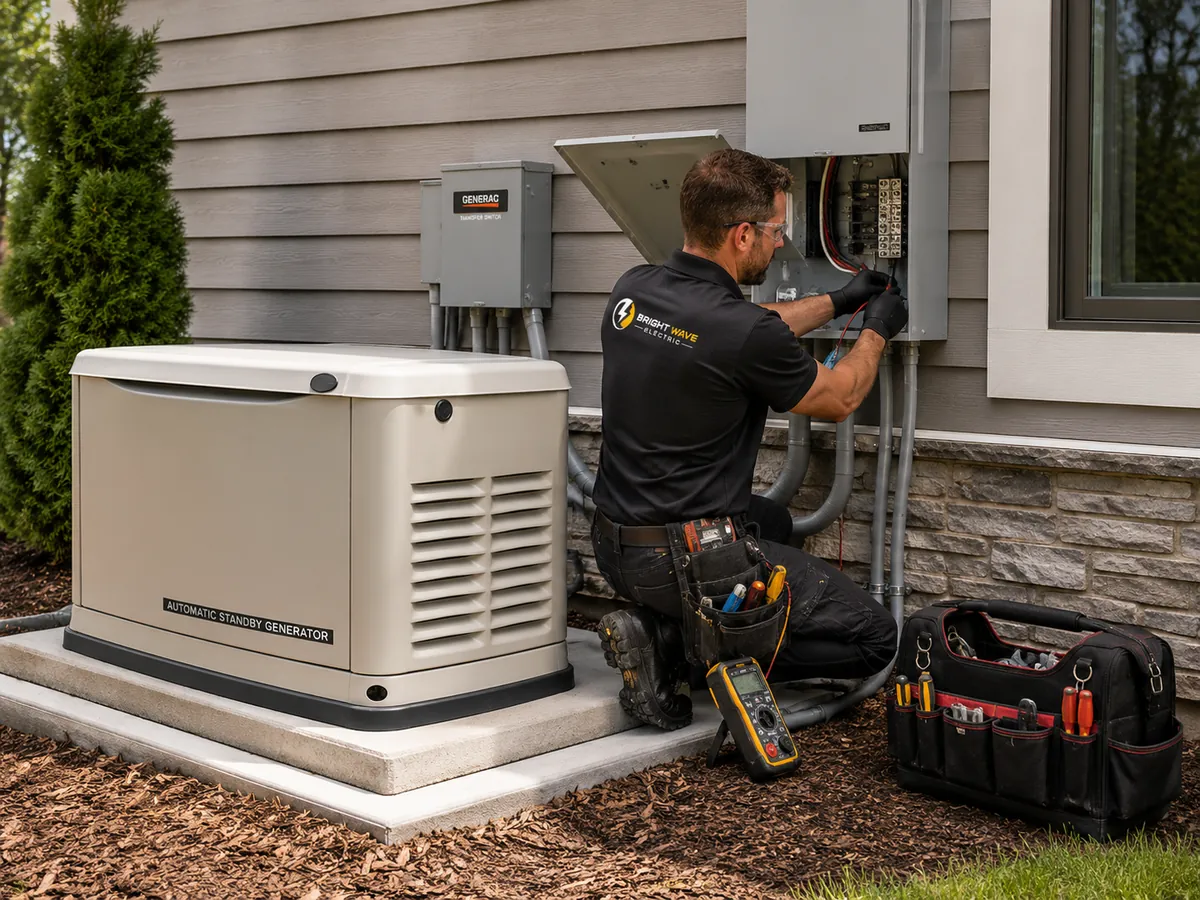
How can you request whole-home generator installation in Henderson, NV?
You can request whole-home generator installation in Henderson, NV when you need a licensed electrician to evaluate your electrical loads, determine generator capacity, inspect your panel, plan the transfer equipment, and provide a project-specific installation estimate.
Call Bright Wave Electric at +1 (725) 313-2488 to schedule your whole-home generator installation assessment.
- Emergency electricians24/7
- Service areaHenderson & Las Vegas Valley
- Work coveredResidential & commercial
Thanks — we’ll be in touch about your electrical service.
What does a whole-home generator installation provide?
A whole-home generator installation provides automatic backup power through a permanently connected standby generator, transfer equipment, and your home's electrical system. The automatic transfer switch detects a utility outage, signals the standby generator to start, and transfers the selected electrical loads from utility power to generator power.
Your installation can support the electrical loads identified during the sizing process, such as:
- Central air conditioning
- Refrigerators and freezers
- Lighting circuits
- Internet and home-office equipment
- Security systems
- Garage-door equipment
- Medical equipment
- Well or sump pumps
- Kitchen circuits
- Selected appliances
- Other approved household loads
The generator capacity, transfer-switch configuration, and electrical scope determine how much of your home can operate during an outage.
How does your electrician determine the right generator size?
Your electrician determines generator capacity by evaluating the electrical loads you want to operate and the power those loads require during startup and normal operation. Proper sizing helps the generator support the planned load without relying only on your home's square footage.
The assessment can evaluate:
- Electrical service capacity
- Main electrical panel
- Heating and cooling equipment
- Motor starting loads
- Major appliances
- Pumps
- Refrigeration
- Lighting
- Home-office equipment
- Medical equipment
- EV charging equipment
- Pool or spa equipment
- Other high-demand circuits
You can choose whole-home coverage or prioritize selected loads based on your electrical demand, generator capacity, and project goals.
Can a standby generator power your entire home?
A properly sized standby generator can power the electrical loads assigned to the backup system when the generator capacity and electrical configuration support those loads. Large electrical equipment, multiple air-conditioning systems, electric heating, EV chargers, pool equipment, and other high-demand devices can significantly affect the required generator capacity.
A licensed electrician can calculate those loads before equipment selection so you know what the proposed generator can support during an outage.
What does the automatic transfer switch do?
The automatic transfer switch controls the connection between utility power, generator power, and the electrical loads assigned to the backup system. When utility power fails, the system can detect the outage, isolate the home from the utility source, start the standby generator, and transfer the approved loads to generator power.
When utility power returns, the transfer switch moves those loads back to utility power and allows the generator to complete its shutdown cycle.
This transfer process also prevents generator power from feeding back onto utility lines through the normal electrical service.
What electrical work can the installation require?
Whole-home generator installation can require generator wiring, transfer-switch connections, panel integration, circuit work, disconnects, control wiring, grounding, and other electrical components required by the selected system. Your existing electrical equipment determines the final scope.
A licensed electrician can inspect:
- Main service equipment
- Electrical panel condition
- Available panel capacity
- Existing breakers
- Grounding and bonding
- Generator connection points
- Transfer-switch location
- Planned backup circuits
- Wiring routes
The inspection also helps identify electrical upgrades that the generator project may require before installation proceeds.
Does your electrical panel need an upgrade?
Your electrical panel may need modification or replacement when its capacity, condition, configuration, or compatibility cannot support the planned generator system. An electrician should evaluate the panel before finalizing the generator and transfer-switch configuration.
Some projects need only transfer equipment and generator connections. Other properties may require panel changes, service work, circuit modifications, or additional distribution equipment.
Evaluating those conditions before installation helps define the correct project scope instead of discovering major electrical changes after work begins.
Where can the generator go on your property?
Generator placement depends on the equipment requirements, property layout, electrical connection point, fuel source, service access, and applicable installation requirements. Your electrician can evaluate potential locations before finalizing the electrical design.
The proposed location should account for factors such as:
- Distance from the electrical service
- Generator manufacturer requirements
- Required service access
- Fuel connection route
- Exhaust direction
- Doors, windows, and air openings
- Property boundaries
- Ground conditions
- Equipment clearances
- Local permitting requirements
The final location should support safe operation while allowing technicians to access the generator for future testing and service.
How does fuel affect the generator installation?
Your fuel source affects generator selection, placement, available capacity, fuel-line requirements, and the final installation scope. Residential standby generators commonly operate on natural gas or propane, depending on the property and selected generator.
The project assessment can evaluate:
- Available natural gas or propane service
- Generator fuel demand
- Existing gas-line capacity
- Required fuel-line routing
- Propane storage requirements
- Generator distance from the fuel source
- Placement requirements
- Required electrical and fuel-trade coordination
For Henderson homes served by natural gas, the project may require an extension or modification of the existing gas line to supply the generator under load. A properly licensed gas or plumbing professional should complete fuel-system work when the project requires that trade.
Your project estimate should identify Bright Wave Electric's electrical scope and any separate fuel-related work required before generator startup.
What happens during whole-home generator installation?
Bright Wave Electric follows a defined installation process that takes your Henderson generator project from electrical assessment and sizing through transfer-switch connection, generator integration, testing, and final startup.
- Assess your electrical system. A licensed electrician evaluates your panel, service capacity, planned backup loads, and potential generator location.
- Calculate the required generator capacity. Your planned loads determine the generator size and electrical configuration.
- Define the installation scope. The electrician identifies the generator location, transfer equipment, electrical connections, fuel requirements, and any necessary electrical upgrades.
- Confirm permit and inspection requirements. The project scope accounts for applicable electrical permits, inspections, and installation requirements.
- Prepare the generator location. The selected location receives the required equipment base or mounting preparation for the specified generator.
- Install the transfer equipment. The electrician connects the automatic transfer switch and required electrical components to the home's electrical system.
- Connect the standby generator. The electrician completes the generator wiring, control connections, grounding, and approved electrical integration.
- Complete the required fuel connection. A properly licensed gas or plumbing professional completes the fuel work required by the selected generator and property.
- Start and test the system. The electrician tests generator startup, transfer operation, electrical output, and the approved backup loads.
- Review generator operation with you. You receive the operating information needed to understand startup, transfer, shutdown, monitoring, and future service requirements.
How long does a generator project take?
Your total generator project timeline depends on equipment selection, permit requirements, electrical upgrades, fuel work, equipment availability, inspection scheduling, and site conditions. The physical installation can take much less time than the complete project from assessment through final approval.
Your estimate should distinguish between:
- Project planning time
- Permit processing
- Equipment availability
- Electrical preparation
- Fuel-system coordination
- On-site installation
- Inspection
- Startup and testing
Separating the total project timeline from the actual installation time gives you a more accurate expectation before work starts.
Do you need permits and inspections?
Your generator installation may require electrical permits, inspections, and other approvals based on the equipment and work performed at your Henderson property. The project scope should identify applicable requirements before installation begins.
Fuel-system changes, electrical-service modifications, transfer equipment, generator placement, and other project conditions can affect which approvals apply.
If your property falls under an HOA, you should also confirm whether the association requires approval for exterior generator placement.
What does generator startup and testing verify?
Generator startup and testing verify that the standby generator, transfer equipment, electrical connections, and approved backup loads operate together as intended. The electrician should test the completed electrical system before the installation enters normal standby operation.
Testing can verify:
- Generator startup
- Automatic transfer operation
- Return to utility power
- Generator electrical output
- Selected backup circuits
- Transfer-switch operation
- Control wiring
- Connected electrical equipment
- System shutdown
The completed test gives you a functional backup-power system rather than equipment that has only been mounted and connected.
How can load management affect generator size?
Load management can control when selected high-demand equipment receives generator power so the system can prioritize more important household loads. This approach can help manage air conditioners, EV charging equipment, electric appliances, pumps, or other equipment with significant electrical demand.
Your electrician can determine whether the proposed generator should support every planned load simultaneously or use load-management equipment to control demand.
That decision belongs in the sizing stage because it can change generator capacity, electrical equipment, and project cost.
Which generator sizes can fit your home?
Your generator size should match the electrical loads you want available during an outage rather than your home's square footage alone. Home size can help estimate the likely coverage level, but HVAC starting demand, major appliances, pool equipment, EV charging, and load-management equipment can substantially change the required capacity.
Common residential configurations include:
| Generator capacity | Typical coverage | Common brands |
|---|---|---|
| 10 kW-14 kW | Essential-circuit backup for smaller homes, including refrigeration, lighting, electronics, and selected HVAC equipment when the calculated load allows it | Generac, Champion, Kohler |
| 18 kW-22 kW | Standard whole-home configurations for many homes with central air conditioning and major household loads | Generac Guardian, Kohler, Briggs & Stratton |
| 24 kW-26 kW | Larger whole-home configurations with higher HVAC demand, appliances, pool equipment, or multiple major loads | Generac, Kohler, Cummins |
| 30 kW-48 kW+ | Large or multi-zone homes with substantial simultaneous electrical demand | Cummins QuietConnect, Kohler |
A licensed electrician can calculate the connected and starting loads before recommending a generator capacity. That calculation helps prevent undersizing the generator or paying for capacity your home does not need.
Which generator brands may fit your installation?
Bright Wave Electric can evaluate standby generator systems from established manufacturers such as Generac, Kohler, Champion, Briggs & Stratton, and Cummins based on the required capacity and electrical configuration. The appropriate generator depends on your calculated electrical load, fuel source, transfer equipment, available installation space, and planned backup coverage.
Common options can include:
- Generac Guardian residential standby generators
- Kohler residential standby generators
- Champion standby generators
- Briggs & Stratton standby generators
- Cummins QuietConnect systems
- Larger liquid-cooled generator configurations for high-demand homes
Your electrician should select generator capacity before narrowing the project to a specific model.
How much does whole-home generator installation cost?
Whole-home and standby generator installation in Henderson typically starts at $5,500 for smaller essential-circuit configurations, while larger whole-home systems can reach $25,000 or more. Your final price depends on generator capacity, transfer equipment, electrical panel condition, fuel requirements, placement, wiring distance, permits, and any required electrical upgrades.
What does generator installation cost by system size?
Typical installed pricing varies by generator capacity and how much of your home the system needs to support.
| Generator capacity | Typical installed cost | Typical coverage |
|---|---|---|
| 10 kW-14 kW essential-circuit system | $5,500-$8,500 | Common for approximately 1,200-1,800 sq. ft. homes that need refrigeration, lighting, electronics, and selected HVAC or other essential loads |
| 18 kW-22 kW standard whole-home system | $8,000-$13,000 | Common for approximately 1,800-2,800 sq. ft. homes with central air conditioning and major household loads |
| 24 kW-26 kW large whole-home system | $10,500-$15,000 | Common for approximately 2,800-4,000 sq. ft. homes with higher HVAC demand, pool equipment, appliances, or multiple large electrical loads |
| 30 kW-48 kW+ liquid-cooled system | $16,000-$25,000+ | Large 4,000+ sq. ft. homes, multi-zone properties, and residences with substantial electrical demand |
Square footage provides only a general coverage reference. Bright Wave Electric can size the generator based on the home's actual electrical load, equipment starting requirements, and planned backup circuits.
What project components affect the installed price?
Your installed generator price combines the generator equipment with the electrical, transfer, fuel, mounting, and permitting work required for the property.
| Project component | Typical cost range | What affects the cost |
|---|---|---|
| Standby generator unit | $3,000-$7,500 | Generator capacity, brand, enclosure, cooling system, and fuel configuration |
| Automatic transfer switch | $600-$1,800 | 100A-200A rating, service configuration, and transfer requirements |
| Electrical labor and wiring | $1,500-$3,500 | Conduit, high-amperage wiring, control wiring, panel connections, transfer equipment, and installation distance |
| Gas-line extension or plumbing work | $600-$2,200 | Fuel demand, pipe size, routing distance, existing gas capacity, and required modifications |
| Generator mounting pad | $250-$600 | Preformed composite pad, poured concrete pad, grading, and site preparation |
| Henderson permits and plan review | $150-$350 | Required electrical, mechanical, or gas permits and the final project scope |
Your property may not require every component shown above. Bright Wave Electric can inspect the electrical system, determine the required installation scope, and provide a project-specific estimate before work begins.
What should you know before scheduling generator installation?
Before your electrician finalizes generator capacity and installation scope, identify the electrical loads you want available during an outage. That gives your electrician a practical starting point for load calculations and equipment planning.
Before your appointment, consider which equipment matters most during an outage:
- Air conditioning
- Refrigeration
- Medical equipment
- Internet
- Home-office equipment
- Lighting
- Security
- Pumps
- Kitchen appliances
- EV charging
- Pool or spa equipment
You do not need to calculate the wattage yourself. Your electrician can evaluate the actual electrical requirements during the project assessment.
What questions should you ask about your generator estimate?
Your generator estimate should identify the major equipment and work required to deliver the planned backup-power system. Clear scope reduces confusion about transfer equipment, electrical upgrades, fuel work, and testing.
Ask whether your estimate accounts for:
- Generator capacity
- Automatic transfer switch
- Electrical installation
- Panel modifications
- Load-management equipment
- Generator placement
- Mounting or site preparation
- Permit requirements
- Fuel connection responsibility
- Startup
- Load testing
- Final inspection
You should also confirm which work would require a separate estimate if site conditions change after the initial assessment.
What maintenance will the generator need after installation?
Your standby generator will need periodic inspection, testing, and maintenance according to the equipment manufacturer's service requirements. Routine service can involve the engine, battery, electrical output, controls, transfer equipment, and other generator components.
Follow the maintenance schedule specified for your installed generator rather than relying on one universal interval for every brand or model.
Bright Wave Electric also provides generator repair and maintenance service when your standby system needs electrical diagnosis, testing, or authorized service work.
Why should you choose Bright Wave Electric for whole home generator installation?
You get licensed whole home generator installation based on your property's electrical demand, the circuits you want backed up, and the capacity required to support them during an outage. Bright Wave Electric installs generator systems throughout Henderson, NV and checks the electrical connections, transfer equipment, and backup operation before completing the installation.
You can expect:
- Licensed electricians for whole home generator installation
- Electrical load calculations before generator sizing
- Generator capacity matched to your backup power requirements
- Automatic transfer switch installation and connection
- Existing panel and service capacity reviewed before installation
- Backup circuit planning based on the appliances and systems you want to keep running
- Proper breaker, conductor, and connection sizing
- Grounding and bonding requirements addressed during installation
- Coordination between the generator, electrical panel, and transfer equipment
- Code-compliant electrical installation
- Testing of automatic transfer and backup power operation
- Circuit and system checks before final completion
- Clear explanation of which loads the installed generator supports
- Installation planning that accounts for future electrical demand where practical
- 24/7 help for urgent generator-related electrical problems
- Direct phone scheduling at +1 (725) 313-2488
What are common whole-home generator installation questions?
These whole-home generator installation FAQs answer the project questions that most directly affect generator sizing, electrical scope, placement, transfer equipment, and your final estimate.