
Smoke and carbon monoxide detector installation in Henderson, NV
Smoke and carbon monoxide detector installation in Henderson, NV gives you licensed electrical service for new detectors, hardwired alarms, interconnected alarms, combination smoke and CO alarms, battery-backup devices, smart detectors, replacement detectors, and existing alarm wiring. Bright Wave Electric can dispatch a licensed electrician to inspect your current detector setup, diagnose detector wiring or electrical connection problems, evaluate device locations, determine wiring and interconnection requirements, install or replace compatible alarms, repair authorized wiring faults, connect hardwired equipment, and test the completed system.
You can request Bright Wave Electric when you need smoke or carbon monoxide detectors installed, outdated alarms replaced, battery-powered detectors upgraded, hardwired alarms connected, existing alarms interconnected, smart detectors installed, or detector wiring inspected at your Henderson property.
Call +1 (725) 313-2488 to request smoke and carbon monoxide detector installation in Henderson, NV.
- Licensed Electricians
- Smoke & Carbon Monoxide Detector Installation
- Hardwired & Interconnected Alarms
- Combination Smoke & CO Detectors
- Smart Smoke & CO Detector Installation
- Detector Replacement, Wiring & Testing
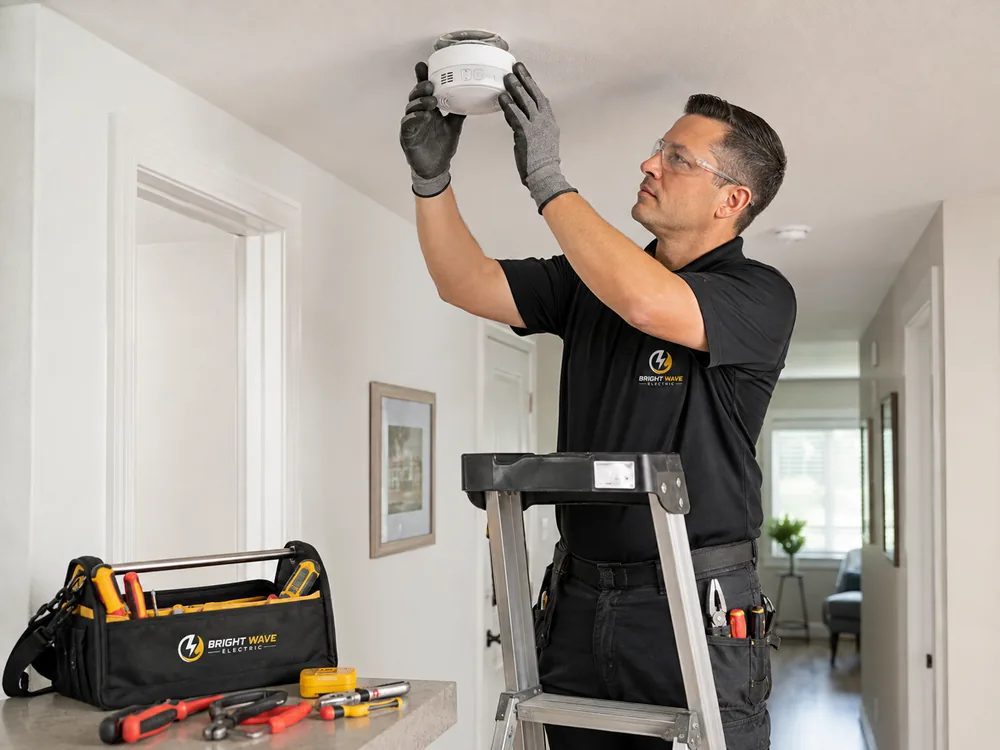
Need smoke and carbon monoxide detector installation in Henderson, NV?
You can request Bright Wave Electric when you need smoke detectors, carbon monoxide detectors, combination alarms, hardwired connections, interconnected detectors, smart detectors, replacement equipment, detector wiring, or completed-system testing at your Henderson property.
Call +1 (725) 313-2488 to request smoke and carbon monoxide detector installation in Henderson, NV.
- Emergency electricians24/7
- Service areaHenderson & Las Vegas Valley
- Work coveredResidential & commercial
Thanks — we’ll be in touch about your electrical service.
What smoke and carbon monoxide detector services can you request?
You can request smoke and carbon monoxide detector installation, replacement, wiring, interconnection, testing, and electrical troubleshooting for your Henderson property.
- Smoke detector installation: A licensed electrician can install new smoke detectors and connect compatible hardwired equipment to the required electrical wiring.
- Carbon monoxide detector installation: An electrician can install compatible CO detectors and evaluate appropriate locations for the planned system.
- Combination smoke and CO detector installation: You can install compatible combination alarms when you want smoke and carbon monoxide detection from the same device.
- Hardwired detector installation: An electrician can connect compatible detectors to permanent electrical power and configure battery backup when the selected equipment provides it.
- Interconnected detector installation: An electrician can connect compatible alarms so one activated detector can trigger the connected alarm system.
- Smoke and CO detector replacement: You can replace outdated, damaged, malfunctioning, or incompatible alarms with equipment suited to the existing electrical setup.
- Detector wiring service: An electrician can inspect detector wiring, diagnose damaged or improper electrical connections, repair authorized wiring faults, and test the corrected connections before installing or reconnecting compatible alarms.
- Detector testing: An electrician can test installed devices, electrical connections, battery backup, and interconnection after completing the work.
Which smoke and carbon monoxide detector setup can you install?
You can install hardwired, interconnected, battery-backup, separate smoke and CO, combination smoke and CO, or compatible smart detectors based on your property, existing wiring, and selected equipment.
Hardwired detectors connect to 120V electrical power and commonly use a replaceable or sealed backup battery when the selected equipment supports that configuration. A licensed electrician can inspect the existing detector wiring, connect compatible equipment, and test primary power and backup operation.
Interconnected detectors connect compatible alarms so one activated device can trigger the other connected alarms throughout the property. A new wired interconnection may require additional three-conductor wiring between detector locations when suitable interconnect wiring does not already exist.
Combination smoke and CO detectors provide smoke and carbon monoxide detection through one compatible device.
Separate smoke and CO detectors let you use different devices when your property layout, existing equipment, or planned detector system calls for separate detection.
Smart smoke and CO detectors can provide connected features such as smartphone alerts, voice notifications, status monitoring, and other functions supported by the selected equipment. A licensed electrician can evaluate the electrical requirements, install compatible hardwired smart detectors, connect the equipment, and test detector operation.
Replacement detectors can use existing electrical connections when the wiring, device type, and electrical condition support the new equipment.
A licensed electrician can inspect your current alarms before recommending a configuration so you do not replace compatible wiring or equipment unnecessarily.
Where can smoke and carbon monoxide detectors be installed?
A licensed electrician can evaluate your Henderson property and determine detector locations based on the building layout, selected equipment, manufacturer instructions, existing wiring, and applicable requirements.
Potential detector locations can include:
- Bedrooms and sleeping areas
- Hallways outside sleeping areas
- Multiple levels of a home
- Basements
- Living areas
- Locations where carbon monoxide detection is required or appropriate for the property
- Existing hardwired detector locations
- New locations that require additional electrical wiring
An electrician can also evaluate ceiling height, wall and ceiling access, existing detector spacing, wiring routes, and nearby electrical connections before installing new equipment.
When should you request smoke and carbon monoxide detector replacement?
You should request detector replacement when existing alarms no longer operate correctly, have reached their required replacement point, lack compatibility with the planned system, or no longer provide the detector configuration your property needs.
Common reasons to request replacement include:
- A detector fails testing
- An alarm repeatedly chirps after basic battery replacement
- A detector produces repeated nuisance alarms
- The manufacture date or recommended replacement date cannot be confirmed
- Existing alarms have reached the manufacturer's replacement interval
- A detector shows physical damage
- Existing alarms do not interconnect as intended
- Older battery-only alarms need an electrical upgrade
- Combination smoke and CO detectors are needed to replace separate or outdated alarms
- Remodeling or electrical work changes the required detector locations
- Existing detector wiring needs correction before new equipment can operate properly
A licensed electrician can inspect the detector and its electrical connection before determining whether the problem comes from the alarm, wiring, power connection, interconnection, or another electrical condition.
Can you replace hardwired detectors without rewiring the entire home?
You may be able to replace existing hardwired detectors without rewiring your entire home when the existing wiring, electrical connections, interconnect configuration, and selected replacement equipment remain compatible.
A licensed electrician can inspect the existing detector circuit before recommending additional wiring.
The electrician can:
- Remove the existing detector
- Inspect the electrical connection
- Check accessible detector wiring
- Evaluate interconnect conductors when present
- Confirm compatibility with the replacement equipment
- Correct authorized wiring problems
- Connect the new detector
- Test power, backup functions, and interconnection
Additional wiring may be required when the existing electrical setup cannot support the planned detector installation or when existing wiring needs correction.
How does smoke and carbon monoxide detector installation work?
A licensed electrician can complete smoke and carbon monoxide detector installation by inspecting the existing system, determining the required equipment and wiring, installing the devices, connecting compatible alarms, and testing the completed work.
- Inspect the existing detector setup. The electrician checks installed alarms, accessible wiring, electrical connections, and current detector locations.
- Evaluate the property layout. The electrician reviews the areas that need detector coverage and determines whether existing locations can support the planned system.
- Determine equipment and wiring requirements. The electrician identifies compatible smoke detectors, CO detectors, combination alarms, hardwired connections, interconnection, and additional wiring when required.
- Complete authorized electrical work. The electrician installs new wiring or corrects existing detector connections when the approved scope requires electrical changes.
- Install or replace the detectors. The electrician mounts and connects compatible alarms in the planned locations.
- Connect compatible interconnected alarms. The electrician connects the detector system through the available wired or compatible interconnection method.
- Test the completed installation. The electrician tests detector operation, electrical power, compatible battery backup, and system communication.
- Review the completed system with you. You receive information about the installed equipment, detector locations, testing functions, and applicable replacement information.
Can smoke and carbon monoxide detectors be installed in an older Henderson home?
You can request detector installation in an older Henderson home even when the property has older alarms, limited detector wiring, or no existing hardwired connection at the planned location.
A licensed electrician can inspect the existing electrical conditions and determine whether the project requires:
- Replacement at existing hardwired locations
- Reuse of compatible detector wiring
- New electrical wiring
- Additional detector locations
- Interconnection between compatible alarms
- Correction of damaged or improper detector connections
- A compatible detector configuration when existing construction makes new hardwired wiring more difficult to install
Finished walls, ceiling access, attic access, existing wiring routes, and the condition of the electrical system can affect the installation scope.
A licensed electrician can determine the wiring requirements before additional electrical work begins.
What does smoke and carbon monoxide detector installation cost?
Smoke and carbon monoxide detector installation starts from $90 for replacement of a standard hardwired smoke detector using an existing compatible wiring connection and mounting location. Final pricing depends on the detector type, existing wiring, new wiring requirements, interconnection, equipment features, installation access, and number of devices.
| Device / installation type | Replacement with existing wiring or mount | New hardwired installation | Scope |
|---|---|---|---|
| Standard hardwired smoke detector | $90-$180 | $180-$350 | 120V hardwired detector with compatible battery backup |
| Combination smoke & CO detector | $120-$220 | $220-$400 | Combined smoke and carbon monoxide detection in one device |
| Smart smoke & CO detector | $180-$300 | $280-$450 | Compatible connected detector with supported smart alerts and device features |
| Battery-only 10-year sealed detector | $40-$90 | N/A | Battery-powered detector for locations where the selected equipment and applicable requirements permit it |
| Interconnected detector circuit addition | N/A | $350-$900+ | Additional wiring required to connect compatible alarms so activation can trigger the interconnected system |
Your final cost can increase when the electrician needs to add new wiring, access finished walls or ceilings, correct damaged detector wiring, add interconnected locations, or troubleshoot an existing electrical problem.
A licensed electrician from Bright Wave Electric can inspect the existing setup and determine the required work before you authorize the installation.
Why should you choose Bright Wave Electric for smoke and carbon-monoxide detector installation?
You get licensed detector installation that accounts for device location, power requirements, existing wiring, and proper communication between interconnected alarms. Bright Wave Electric installs and replaces smoke and carbon-monoxide detectors throughout Henderson, NV and tests each connected device before completing the work.
You can expect:
- Licensed electricians for detector installation and replacement
- Detector placement reviewed according to applicable requirements
- Hardwired smoke and carbon-monoxide detector installation
- Interconnected alarm setup for compatible systems
- Existing detector wiring and electrical connections checked
- Replacement of damaged, outdated, or nonworking hardwired detectors
- Compatible smoke, carbon-monoxide, and combination detector installation
- Battery-backup functions checked on applicable devices
- Power supply and circuit connections verified
- Troubleshooting for detectors that chirp, lose power, or fail to communicate
- Existing interconnected alarms tested after new devices are added
- Proper mounting and secure electrical connections
- Function testing of installed detectors before the appointment ends
- Residential and applicable commercial detector service
- 24/7 help for urgent electrical problems
- Direct phone scheduling at +1 (725) 313-2488
What should you know before scheduling smoke and carbon monoxide detector installation?
Before scheduling detector installation, you should know whether you need new alarms, replacement equipment, additional detector locations, hardwired connections, or troubleshooting of an existing system.